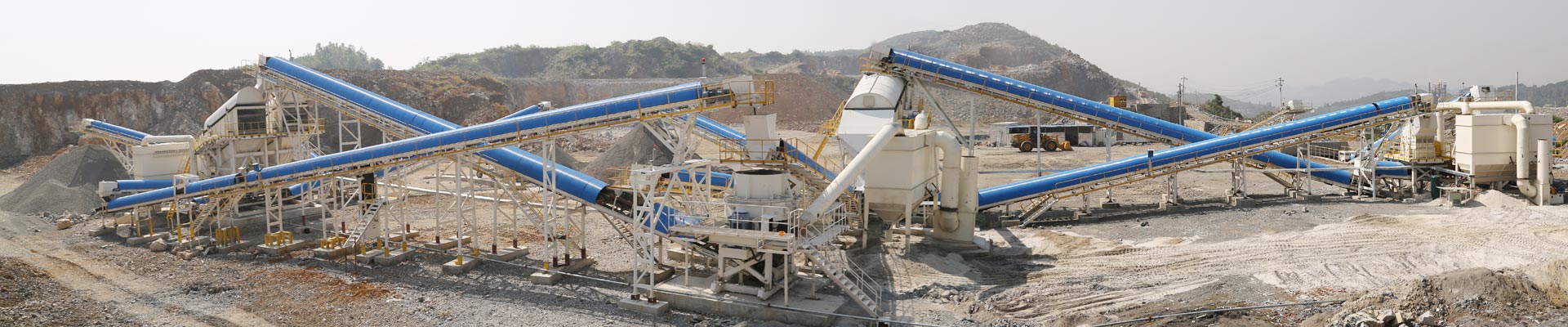
In the field of construction waste recycling, Shanghai Shanmei mobile crushing plants, featuring flexible relocation and on-site operation, act as "mobile rangers" at demolition sites, mainly for scattered, short-term and multi-point on-site treatment. However, for large-volume, long-term and centralized municipal solid waste treatment demands, mobile units cannot meet the required standards in terms of capacity and environmental configuration. Under such circumstances, the stable, high-efficiency and eco-friendly fixed construction waste treatment production line serves as the main force in municipal solid waste industrial parks.
Different from the lightweight design of mobile equipment, Shanghai Shanmei fixed construction waste processing lines are custom-built for fixed sites and large-scale continuous production. They are widely used in suburban construction waste recycling centers, large solid waste circular industrial parks and centralized waste disposal bases. They receive demolition waste, construction spoil and decoration waste collected and transported uniformly across the city, adapting to all-weather, non-stop, large-scale standardized production. They are the core equipment for standardized and regular municipal construction waste disposal.
Outstanding environmental performance to meet strict urban EIA standards
Environmental compliance is the core threshold for current construction waste treatment projects. Dust and noise pollution from open-air crushing are the major reasons for rectification and shutdown of most small treatment sites. The biggest advantage of Shanmei fixed lines lies in the fully closed-loop eco-friendly production mode, which eliminates pollution at the source.
Clear scenario division: a combination of fixed and mobile facilities improves the solid waste management system
Relying on stable output, superior environmental protection performance and standardized production, Shanghai Shanmei fixed construction waste treatment production lines have become key facilities for major Chinese cities to build green solid waste recycling systems and implement dual-carbon policies.